
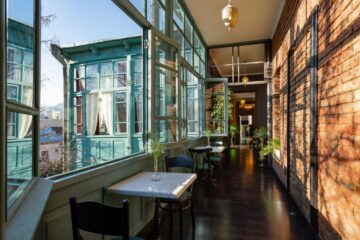
Tbilisi has emerged as one of Europe’s most attractive destinations for digital nomads, combining affordable living ($900–1,500 USD monthly for solo travelers), fast and reliable internet (averaging 30–100 Mbps), and a growing nomad community with integrated coworking spaces and regular networking events. Georgia’s “Remotely from Georgia” visa program, offering one-year stays for citizens of 95 countries with a streamlined application process, eliminates the persistent visa-run logistics that plague nomads across other destinations.
Premier Nomad-Focused Accommodations
Elia Boutique Hostel & Apart-Hotel (Kaishauri Street 12, Avlabari district) stands as the definitive choice for digitally-oriented travelers seeking elevated hostel accommodations. With a 9.5/10 rating from the 2024 Traveller Review Awards and over 180 consecutive five-star reviews within the past year, Elia transcends the typical backpacker stereotype through careful curation of vintage Georgian aesthetic elements and thoughtful interior design. The hostel strategically positions itself near Sameba Cathedral (Holy Trinity Cathedral), positioning guests for cultural immersion while maintaining proximity to coffee culture and restaurants. Accommodations include mixed and women-only design dormitories equipped with flat-screen TVs, microwaves, kettles, blackout drapes, and SmartTV technology. Orthopaedic mattresses and hypoallergenic pillows demonstrate attention to sleep quality—a critical consideration for remote workers managing time zones across continents. The premium apartment segment comprises three separate bedrooms within a single bookable unit, complete with spacious lobby area featuring vintage sofas, coffee service, water boilers, microwave, and crockery—functionality designed explicitly for longer stays and small group coliving arrangements. The hostel actively facilitates cultural engagement through organized activities, excursions, and events celebrating authentic Georgian traditions. WiFi maintains 25+ Mbps speeds throughout, supporting video conferencing and large file uploads without friction.
Fabrika Hostel & Suites (8 E. Ninoshvili Street, Chugureti district) functions simultaneously as hostel, coworking hub, cultural center, restaurant, bar, and event venue—arguably the region’s most comprehensive all-in-one nomad destination. Originally a Soviet button-sewing factory before its 2011 conversion into a creative space, Fabrika maintains its gritty industrial-chic aesthetic across 32-acre grounds housing multiple interconnected venues. The institution-status hostel features an enormous common lounge doubling as a de facto coworking space, complete with hammocks, sofas, abundant natural light, and exceptional WiFi throughout. Dorm rooms offer genuinely comfortable beds with individual reading lights, miniature bedside cabinets, and strategically positioned electrical outlets—practical design elements addressing chronic backpacker frustrations. Keycard security for individual rooms and 24-hour doorman supervision create professional-grade safety standards, assuaging security concerns that deter some digital nomads from hostel environments. The sprawling courtyard hosts permanent cafes, bars, and boutique shops, eliminating the need to venture beyond Fabrika’s grounds for meals, coffee, work environment changes, or social activities. Beyond accommodation, Fabrika actively cultivates nomad community through organized yoga sessions, poetry readings, dedicated digital nomad meetups, rooftop barbecues, and curated networking occasions. The location 8 minutes’ walk from Marjanishvili Metro station provides convenient transport to throughout Tbilisi, while the surrounding Chugureti neighborhood exudes hipster credibility with restaurants, bars, and contemporary culture. At approximately $12/night for 6-bed dormitories, the pricing reflects Fabrika’s premium all-in-one positioning without excessive premium markups.
Hostel Nomad (Dzmebi Zubalashvilebi Street 21, Mtatsminda district) delivers exceptional value through deliberately nomad-centric design, earning a 9.3/10 rating from recent guests on Booking.com and consistent recognition as “nomad vibes” accommodations. Each bunk includes integrated work desks—a surprisingly rare feature in traditional hostel environments that forces remote workers into uncomfortable compromises between sleeping and working in confined spaces. The hostel’s design emphasizes functionality: parquet floors, air-conditioning, private bathrooms despite shared dorm designation, comfortable beds with individual charging points, generous locker storage (adequate for even large backpacks), and hairdryers provided at no surcharge. Breakfast inclusion and complimentary tea/coffee service establish baseline sustenance without forcing visitors to immediately locate dining infrastructure upon arrival. The thoughtfully curated interior—decorated with original artworks and carefully selected furnishings—creates atmosphere substantially more refined than utilitarian backpacker warehouses, critical for maintaining psychological wellness during extended remote work stays. Location in Old Town positioning guests within short walking distance of Freedom Square, restaurants, bars, and shopping centers while maintaining proximity to metro access. The hostel’s self-description as “author’s works and thoughtful interior created for the most comfortable stay of our guests” fundamentally repositions hosteling from budget necessity into lifestyle choice.
Communa Good Vibes (Vashlovani #5, Vera district) represents a rare hostel explicitly integrating coworking facilities directly into accommodation structures. Located in Tbilisi’s most happening district for digital nomads—the Vera neighborhood marked by trendy cafes, wine bars, and creative spaces—the hostel achieves perfect symbiosis between living and working arrangements. The on-site coworking space with meeting rooms directly addresses the frequent nomadic challenge of maintaining professional-grade workspaces within shared housing. Twenty-one total rooms balance private accommodation options (1 king bed, 1 queen bed arrangements) with social dormitory spaces (4-5 bunk bed configurations). Air-conditioned rooms feature work desks, TV, WiFi access, and full bathroom amenities—comprehensive functionality often absent in budget hostel environments. The integrated lounge, terrace, and housekeeping services (24-hour reception, luggage storage) address the practical infrastructure needs that enable productive remote work. Proximity to Marjanishvili (650 meters) and surrounding cultural venues creates natural work-life integration: commuting between coworking and accommodation requires minutes, while evening social activities remain mere blocks away. A 10/10 booking rating and emphasis on “cozy spot in central Tbilisi” with “vibrant lounge and inviting terrace” signals hostel operator recognition of nomad prioritization of communal spaces supporting both professional and social engagement.
Integrated Coworking Infrastructure
LOKAL Tbilisi represented the strongest fusion of coliving and coworking before entering reinvention phase (as of 2024), though its legacy demonstrates critical nomad infrastructure considerations. Previously operating with founder expertise from the digital nomad community itself, LOKAL provided 100+ Mbps WiFi (Tbilisi’s fastest available), dedicated coliving spaces starting at $21/night, and coworking day passes at $9.50 USD. The membership structure—$160/month for unlimited monthly access, $80 for 10-day passes, $9.50 daily—provided flexibility spanning transient one-week stays to three-month residencies. Beyond facility amenities, LOKAL created structured community engagement through Georgian language courses, game nights, BBQs, and member-led knowledge-sharing sessions, addressing the isolation risk accompanying independent remote work. The Vera neighborhood location positioned colivers near Wine Factory (converted cultural hub), restaurants, and cafes supporting work-life integration. While currently paused, LOKAL’s organizational model—prioritizing community alongside workspace and accommodation—established the template for nomad-specific hospitality.
Impact Hub Tbilisi (located within Fabrika courtyard) functions as the city’s original and most established coworking space for nomads. Flexible desk memberships at 500 GEL/month (~$185 USD) provide dedicated workspace, unlimited WiFi, printer/scanner access, and security systems. Day passes accommodate shorter-term needs at 40 GEL (~$15 USD). Regular networking events, workshops, and community gatherings maintain engagement crucial for preventing remote-work isolation while facilitating collaboration and friendship formation. Located within Fabrika’s cultural ecosystem provides coworking members cross-access to cafes, bars, restaurants, and hostel social spaces—creating organic work environment variety without transport requirements.
Terminal (multiple Tbilisi locations) represents the international coworking standard with private offices, dedicated desks, and hot desks across professionally designed spaces. While not specifically positioned as nomad accommodation, the extensive amenities—24-hour access, IT support, standing desks, coffee provision, free parking—address professional remote-work requirements. Pricing scales from $127+ monthly for hot desks to $792+ for private offices, targeting mid-range and upper-tier remote workers.
Digital Nomad Community Infrastructure
The digital nomad presence in Tbilisi extends beyond accommodation and coworking into active community networks facilitating relationship formation and collaborative opportunities. Tbilisi Digital Nomads Facebook group maintains regular engagement, with members sharing recommendations, organizing meetups, and providing localized advice inaccessible to guidebooks. Expats in Georgia (broader country-level community) complements city-specific networking. Weekly meetup.com events hosted across coworking spaces—particularly Fabrika, Impact Hub, and previously LOKAL—create structured social occasions supporting the relationship-formation critical for psychological wellbeing during extended remote work. These community mechanisms address a frequently underestimated nomadic challenge: the professional productivity achievable through coworking and accommodation cannot fully compensate for social isolation absent intentional community engagement.
Neighborhood Positioning
Vera district emerges as the nomad epicenter, housing LOKAL, Impact Hub (via Fabrika), and numerous cafes catering to laptop workers. The neighborhood’s cultural credentials—Wine Factory, open-air cinema, contemporary restaurants—support the work-rest-explore rhythm essential for sustainable remote living.
Old Town/Avlabari, while more touristy and historically-focused, concentrates numerous hostels (Elia, Envoy, Hostel Nomad) and provides immediate access to Freedom Square, Narikala Fortress, and the Metekhi Church—cultural attractions supporting the distinction between “work location” and “living location”. The neighborhood’s authentic character, narrow cobblestone streets, and traditional Georgian architecture create an environmental immersion valuable for extended stays.
Vake and Saburtalo offer quieter, more residential alternatives for nomads seeking reduced noise and tourist concentration, though at the cost of longer commutes to coworking spaces and primary social hubs.
Practical Considerations for Nomadic Stays
Internet reliability—consistently cited as the nomadic primary concern—remains Georgia’s strongest asset. Multiple sources confirm 30–100 Mbps as standard availability, with dedicated coworking spaces achieving 100+ Mbps speeds sufficient for video calls, large uploads, and real-time collaboration. Power infrastructure operates on 220V with Type C and F outlets (European standards), requiring voltage converter confirmation but presenting no unique challenges. Air-conditioning presence throughout modern hostels addresses summer conditions (June–August temperatures and humidity), while May–June and September–October provide optimal climate conditions for outdoor work and exploration.
The “Remotely from Georgia” visa program’s one-year authorization eliminates the monthly visa renewal logistics plaguing Thai, Indonesian, and Latin American destinations popular with previous-generation nomads. Cumulative visa runs, border crossings, and uncertainty surrounding renewal approval disappear—a structural advantage positioning Georgia competitively against established nomad destinations.
Monthly living costs ranging from $900–1,500 USD sustain comfortable urban lifestyles with daily restaurant meals, cafe work sessions, weekend excursions, and genuine savings capacity—achievable only in specific global regions. The Georgian Lari exchange rate (approximately 2.7–3.0 GEL per USD) provides favorable purchasing power without the extreme cheapness (and associated quality compromises) found in Southeast Asian destinations.
Ultimately, Tbilisi’s distinction for digital nomads lies not in any single exceptional feature but rather in system-level integration: integrative hostels providing workspace infrastructure, coworking spaces supporting community formation, neighborhood placement facilitating work-life balance, visa policy enabling genuine relocation stability, and economic conditions supporting both comfort and savings. This combination creates conditions for sustainable, psychologically healthy remote work unavailable in destinations excelling in individual categories while lacking comprehensive nomadic infrastructure.