
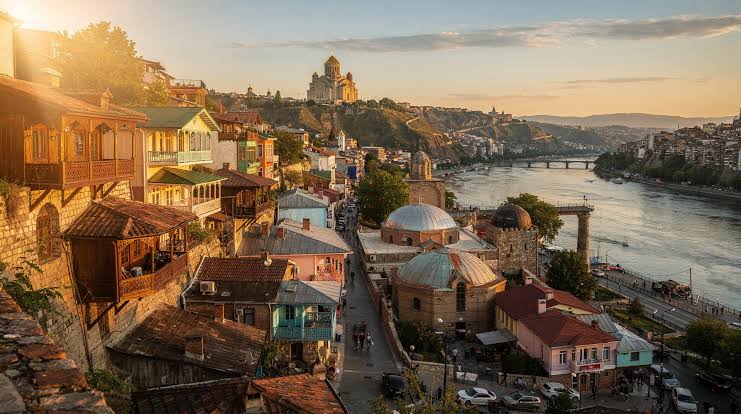
Tbilisi is one of the most fascinating cities in the Caucasus, combining a historic old town, sulfur baths, panoramic viewpoints, Georgian cuisine, modern cafés, lively nightlife and centuries of cultural influences. Whether you have one day, a weekend or several days, this guide covers the best things to do in Tbilisi for first-time visitors and returning travelers.
Georgia’s capital is a city that rewards travelers who explore it on foot. You can start your morning in the historic Old Town, walk through narrow streets toward the Metekhi area, ride the cable car to Narikala Fortress, relax in a traditional sulfur bath and finish the day with Georgian food and wine.
Beyond the major attractions, Tbilisi is also about atmosphere. Balconied houses, courtyards, churches, contemporary architecture, wine bars and small restaurants appear around almost every corner. The result is a destination that feels historic without being frozen in the past.
Walk through the historic streets, courtyards and colorful balconies.
Enjoy some of the city’s best panoramic views from above the Old Town.
Experience one of Tbilisi’s most famous historical traditions.
Why Visit Tbilisi?
Tbilisi is different from many European capitals because several architectural and cultural layers coexist in a relatively compact area. Medieval churches, traditional Georgian homes, Soviet-era buildings and modern structures can all be found within the same city.
It is also an excellent base for exploring other parts of Georgia. Travelers can combine a stay in Tbilisi with day trips to Kakheti, Mtskheta, Kazbegi, Gori and other destinations.
1. Explore the Old Town of Tbilisi
Exploring Old Tbilisi is arguably the best free activity in the city. The historic center is filled with narrow streets, traditional wooden balconies, small courtyards, churches, cafés, restaurants and buildings with distinctive Georgian architectural details.
Instead of following a rigid itinerary, give yourself a few hours to wander. Start around the historic center and continue toward the Abanotubani sulfur-bath district, Metekhi and the riverside.
What to look for in Old Tbilisi
- Traditional Georgian wooden balconies.
- Historic courtyards and residential streets.
- Small wine bars and traditional restaurants.
- Churches and historic buildings.
- Street art and contemporary galleries.
- Views toward the hills surrounding the city.
2. Visit Narikala Fortress
Narikala Fortress is one of Tbilisi’s most recognizable landmarks. Located on a hill overlooking the Old Town, the fortress provides spectacular views across the city and the Mtkvari River.
You can reach the area by walking uphill or using the cable car from the riverside. Combining the cable car with a walk through the Old Town makes for one of the easiest sightseeing routes in Tbilisi.
Try to visit around sunset if the weather is clear. The changing light over the rooftops and hills makes the viewpoint particularly impressive.
3. See the Mother of Georgia Statue
Near Narikala stands Kartlis Deda, commonly known as the Mother of Georgia. The large monument overlooks Tbilisi and has become one of the city’s most recognizable symbols.
The statue is particularly convenient to visit together with Narikala Fortress because the two attractions are located close to each other.
4. Relax in a Tbilisi Sulfur Bath
Tbilisi’s sulfur baths are one of the experiences that make the city unique. The Abanotubani district is traditionally associated with the natural hot springs that helped shape the history and identity of the capital.
Visitors can choose between different bathhouses and private rooms. Some offer traditional bathing experiences and additional treatments.
What to know before visiting a sulfur bath
- Private rooms are convenient for couples, families and small groups.
- Prices vary depending on the bathhouse, room and duration.
- Booking ahead can be useful during busy travel periods.
- Bring anything you personally need for showering and changing.
- If you have health concerns about hot baths, ask a medical professional before using them.
5. Walk Across the Bridge of Peace
The Bridge of Peace is one of modern Tbilisi’s most recognizable architectural landmarks. Its curved glass-and-steel design crosses the Mtkvari River and connects parts of the historic center with Rike Park.
Visit during the evening to see the bridge illuminated. It is also an excellent starting point for exploring Rike Park and taking the cable car toward Narikala.
6. Explore Rike Park
Rike Park is a pleasant place to take a break while sightseeing. Its riverside location makes it an easy stop between the Old Town, Bridge of Peace and cable-car station.
Families may appreciate the open spaces, while photographers can use the park and river as foregrounds for city views.
7. Walk Along Rustaveli Avenue
Rustaveli Avenue is one of the main arteries of central Tbilisi and an important cultural and architectural area. It is home to theaters, museums, shops, cafés and important public buildings.
A walk along the avenue is particularly useful if you want to experience a different side of Tbilisi beyond the medieval Old Town.
8. Visit the National Museum of Georgia
Travelers interested in archaeology, history and Georgian culture should consider visiting the National Museum of Georgia. Its collections help explain the country’s long and complex history, from ancient periods through more recent eras.
A museum visit is especially useful on rainy days or when you want a break from walking around the city.
9. Discover the Georgian National Gallery
Art lovers can add the Georgian National Gallery to a central Tbilisi itinerary. The gallery is associated with Georgia’s artistic heritage and provides another perspective on the country’s cultural development.
10. Visit the Holy Trinity Cathedral of Tbilisi
The Holy Trinity Cathedral, commonly known as Sameba, is one of the most impressive religious buildings in the city. Its large scale makes it visible from many parts of Tbilisi.
The cathedral complex is particularly atmospheric in the morning or late afternoon. Dress respectfully when visiting religious sites in Georgia.
11. See Metekhi Church and the Mtkvari River
Metekhi Church occupies a dramatic position above the Mtkvari River and is closely connected with the history of Tbilisi.
The area is worth visiting for both its historical importance and its views. It can easily be combined with a walk through the Old Town and a visit to the Bridge of Peace.
12. Try Traditional Georgian Food
One of the best things to do in Tbilisi is simply eat. Georgian cuisine is one of the strongest reasons to spend several days in the capital.
| Dish | What to Expect | Best For |
|---|---|---|
| Khinkali | Juicy Georgian dumplings traditionally filled with meat or other fillings. | First-time visitors |
| Khachapuri | Cheese-filled Georgian bread available in several regional styles. | Comfort food |
| Lobio | A traditional bean-based Georgian dish. | Vegetarian travelers |
| Badrijani | Eggplant prepared with walnut-based filling. | Vegetarian starters |
| Mtsvadi | Georgian-style grilled meat. | Meat lovers |
Don’t forget Georgian wine. The country has one of the world’s oldest winemaking traditions, and Tbilisi is an excellent place to taste wines from different Georgian regions.
13. Take a Georgian Wine Tasting
Wine enthusiasts should dedicate at least one evening to tasting Georgian wines. Look for tastings that explain traditional Georgian winemaking methods and introduce wines from regions such as Kakheti.
Wine bars can be a relaxed way to learn about local varieties without committing to a full-day winery excursion.
14. Shop at Dezerter Bazaar
For a more local experience, visit Dezerter Bazaar. Markets are an excellent way to see everyday life in Tbilisi and discover Georgian produce, spices, cheeses, dried fruit and other food products.
Go earlier in the day if you want to see the market at its liveliest.
15. Explore Fabrika
Fabrika is a former Soviet sewing factory transformed into a creative urban space. Today it is associated with cafés, restaurants, bars, design spaces, events and social areas.
It is particularly popular with younger travelers and digital nomads looking for a more modern side of Tbilisi.
16. Discover Tbilisi’s Nightlife
Tbilisi has developed a strong nightlife scene, ranging from relaxed wine bars and cocktail venues to clubs and electronic music spaces.
For travelers who want nightlife, check current event schedules because venues and events can change. Weekends generally offer more options, while smaller bars can be enjoyable during the week.
17. Take the Funicular to Mtatsminda
Mtatsminda overlooks Tbilisi and offers another perspective over the capital. The funicular makes reaching the mountain considerably easier than walking all the way uphill.
The area is useful for combining sightseeing, panoramic photography and a relaxed meal or coffee with city views.
18. Visit Tbilisi’s Chronicle of Georgia
The Chronicle of Georgia is a monumental artistic installation located outside the central tourist area. Its enormous columns and reliefs make it one of the more unusual sights in Tbilisi.
Because it is farther from the Old Town, plan it as a separate excursion rather than trying to squeeze it between attractions in central Tbilisi.
19. Enjoy Tbilisi’s Cafés and Specialty Coffee
Tbilisi has a growing café culture. If you enjoy specialty coffee, brunch, pastries or working remotely, leave some unscheduled time in your itinerary.
The best travel days are not always the ones packed with attractions. Spending an hour in a local café can help you experience the city at a slower pace.
20. Take a Day Trip from Tbilisi
Tbilisi is also a convenient base for exploring central and eastern Georgia. Depending on your schedule, consider a day trip to Mtskheta, Kakheti, Gori or other nearby destinations.
| Destination | Why Visit? | Recommended Time |
|---|---|---|
| Mtskheta | Historic religious sites and ancient Georgian heritage. | Half day |
| Kakheti | Wine, food, countryside and Georgian wineries. | Full day or more |
| Gori | History and access to nearby attractions. | Half to full day |
| Kazbegi | Mountain landscapes and spectacular Caucasus scenery. | Full day, preferably longer |
Best Things to Do in Tbilisi by Interest
Old Tbilisi, Narikala, Metekhi, museums, Sameba and the Chronicle of Georgia.
Khinkali, khachapuri, Georgian wine, markets and traditional restaurants.
Old Town walks, sunset viewpoints, wine bars, sulfur baths and romantic dinners.
Rike Park, cable cars, museums, Mtatsminda and easy sightseeing routes.
Fabrika, wine bars, cocktail venues and Tbilisi’s club scene.
Walking tours, viewpoints, markets, parks and inexpensive Georgian food.
Tbilisi Trip Planner
Choose the amount of time you have and your main travel interest to get a simple itinerary idea.
“`How Many Days Do You Need in Tbilisi?
One day is enough to see the essential highlights if your schedule is tight. Focus on Old Tbilisi, Narikala, the sulfur baths district, Bridge of Peace and a Georgian dinner.
Two days gives you a much better experience. Add museums, Sameba, Rustaveli Avenue, Mtatsminda or Fabrika.
Three days is ideal for many first-time visitors. You can explore the city without constantly checking the clock and still have time for food, wine and neighborhoods away from the main tourist route.
Four or more days allows you to use Tbilisi as a base for day trips while keeping enough time for the capital itself.
Best Time to Visit Tbilisi
Tbilisi can be visited throughout the year, but spring and autumn are particularly attractive for sightseeing because temperatures are generally comfortable for walking.
| Season | What to Expect | Best For |
|---|---|---|
| Spring | Milder weather and good conditions for walking. | Sightseeing and day trips |
| Summer | Warmer weather and long days. | Outdoor activities and nightlife |
| Autumn | Comfortable sightseeing and seasonal food and wine experiences. | Culture, food and wine |
| Winter | Cooler conditions but a quieter urban atmosphere. | Culture, food and city breaks |
How to Get Around Tbilisi
The historic center is highly walkable, and walking is often the best way to discover the city’s architecture and atmosphere.
For longer distances, Tbilisi has public transportation options including the metro and buses. Taxis and ride-hailing services can also be useful when traveling with luggage or visiting attractions outside the center.
Walking
Best for Old Tbilisi, Rustaveli Avenue, the riverfront and nearby attractions. Comfortable shoes are important because some historic streets and hills are uneven or steep.
Metro
Useful for moving around the broader city quickly, particularly when your accommodation is outside the main tourist center.
Taxi and ride-hailing
Convenient for airport transfers, late-night trips and destinations where public transportation is less practical.
Where to Stay in Tbilisi
Choosing the right neighborhood can significantly affect your experience. First-time visitors often prefer staying relatively close to the historic center.
| Area | Best For | Atmosphere |
|---|---|---|
| Old Tbilisi | First-time visitors and sightseeing | Historic and atmospheric |
| Rustaveli | Museums, culture and central location | Urban and central |
| Vera | Cafés, restaurants and longer stays | Local and trendy |
| Marjanishvili | Nightlife and younger travelers | Lively and creative |
| Avlabari | Views and access to historic attractions | Residential and traditional |
What to Eat in Tbilisi
Don’t leave Tbilisi without trying several Georgian dishes. Restaurants range from inexpensive local eateries to modern interpretations of Georgian cuisine.
A good first meal might include khinkali, khachapuri, a vegetable or walnut-based appetizer, grilled meat and a glass of Georgian wine.
If you are vegetarian or vegan, Georgian cuisine is particularly useful because many traditional dishes are naturally plant-based or can be ordered without meat.
Tips for First-Time Visitors to Tbilisi
- Wear comfortable shoes for hills and uneven historic streets.
- Don’t try to see every attraction in one day.
- Keep some flexibility for restaurants, cafés and spontaneous discoveries.
- Learn a few basic Georgian words as a courtesy.
- Carry a small amount of cash in addition to a card.
- Respect dress expectations when visiting churches.
- Use official or well-reviewed transportation options.
- Check attraction opening hours before making a tightly scheduled itinerary.
- Book popular accommodation and experiences ahead during peak travel periods.
- Leave time for Georgian food and wine rather than treating them as secondary activities.
Free Things to Do in Tbilisi
Tbilisi can be explored without spending much money. Some of the most memorable experiences are simply walking through the city and enjoying its architecture and viewpoints.
Is Tbilisi Good for a Weekend Trip?
Absolutely. Tbilisi works particularly well as a two- or three-day city break. The central attractions are relatively concentrated, while the city’s restaurants, wine bars and cultural venues give you plenty to do after sightseeing.
A good weekend itinerary could combine Old Tbilisi and Narikala on the first day, museums and Rustaveli on the second, and a relaxed food-and-wine experience or short excursion on the third.
Frequently Asked Questions About Tbilisi
Tbilisi is best known for its historic Old Town, sulfur baths, distinctive architecture, Georgian cuisine and wine, cultural attractions and dramatic location among surrounding hills.
Two to three full days is a good amount of time for a first visit. One day covers the major highlights, while three days gives you time for museums, food, neighborhoods and a more relaxed pace.
Tbilisi can be relatively affordable compared with many major European capitals, although accommodation, restaurants and activities vary considerably by neighborhood and travel season.
Old Tbilisi is convenient for first-time visitors who want to walk to many attractions. Rustaveli, Vera, Avlabari and Marjanishvili are also worth considering depending on your interests.
Yes. Many major tourist attractions are within walking distance of one another, especially in and around the historic center. Some areas are hilly, so comfortable footwear is recommended.
For a first visit, prioritize Old Tbilisi, Narikala Fortress, the sulfur baths district, Bridge of Peace, Georgian food and wine, Sameba Cathedral and at least one panoramic viewpoint.
Yes. You can explore the central attractions on foot and use public transportation or taxis for longer distances. A car is generally more useful for excursions outside the city.
Ready to Explore Tbilisi?
From historic streets and ancient fortresses to sulfur baths, Georgian wine, traditional food and modern nightlife, Tbilisi offers a surprisingly diverse city-break experience.
For a first visit, plan at least two or three days and leave some free time to simply walk, eat and discover the city at your own pace.